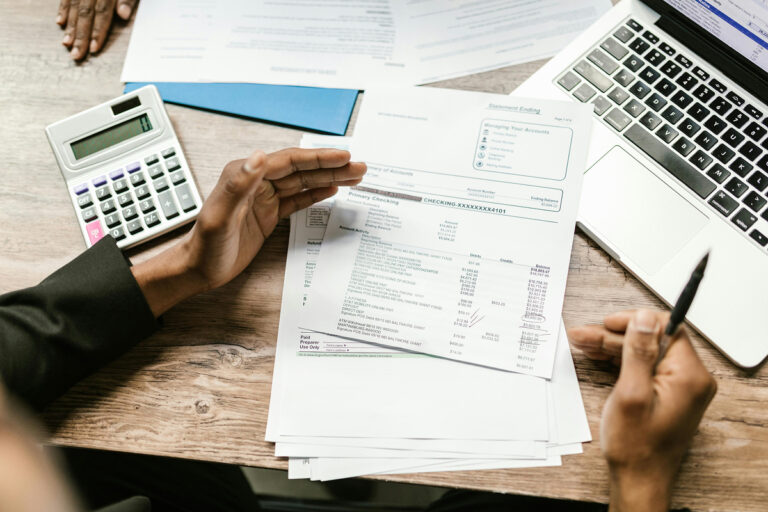
Bookkeeping for plumbers in Canada rarely fails because of anything at a desk — it fails on the drive between jobs, where receipts live for exactly as long as it takes someone to lose them. Dave Okafor didn't lose receipts on purpose. He lost them the normal way — stuffed in a cupholder, shoved in …
Bookkeeping for plumbers in Canada rarely fails because of anything at a desk — it fails on the drive between jobs, where receipts live for exactly as long as it takes someone to lose them.
Dave Okafor didn’t lose receipts on purpose. He lost them the normal way — stuffed in a cupholder, shoved in a jacket pocket after a supply run, tossed on the passenger seat where they’d sit under a coffee cup until they faded to nothing.
By the time tax season rolled around, Dave and his bookkeeper were doing the math on what that pile actually cost him: somewhere around $3,400 a year in expenses he genuinely paid for and simply couldn’t prove.
Why bookkeeping for plumbers looks nothing like the textbook version
Here’s the thing nobody tells plumbers about bookkeeping: it was never a discipline problem. Dave runs Coastline Plumbing & Drain with a small crew, eight jobs a day, parts runs between calls, gas station stops, the odd emergency trip to the supply house. Try stopping mid-job under a sink to log a $12 fitting into a spreadsheet. Nobody does that. Not once, let alone every time.
So the receipts piled up instead. And piles get lost. Multiply that across a year of jobs, and it’s not a rounding error — it’s real, deductible money that quietly stops existing because the paper trail never made it home.
Most advice aimed at trades treats this as a habit problem: “just log it right away,” “keep a folder in the glovebox.” None of that survives contact with an actual workday. The fix isn’t a better habit. It’s removing the step that habit depends on.
What actually fixed it
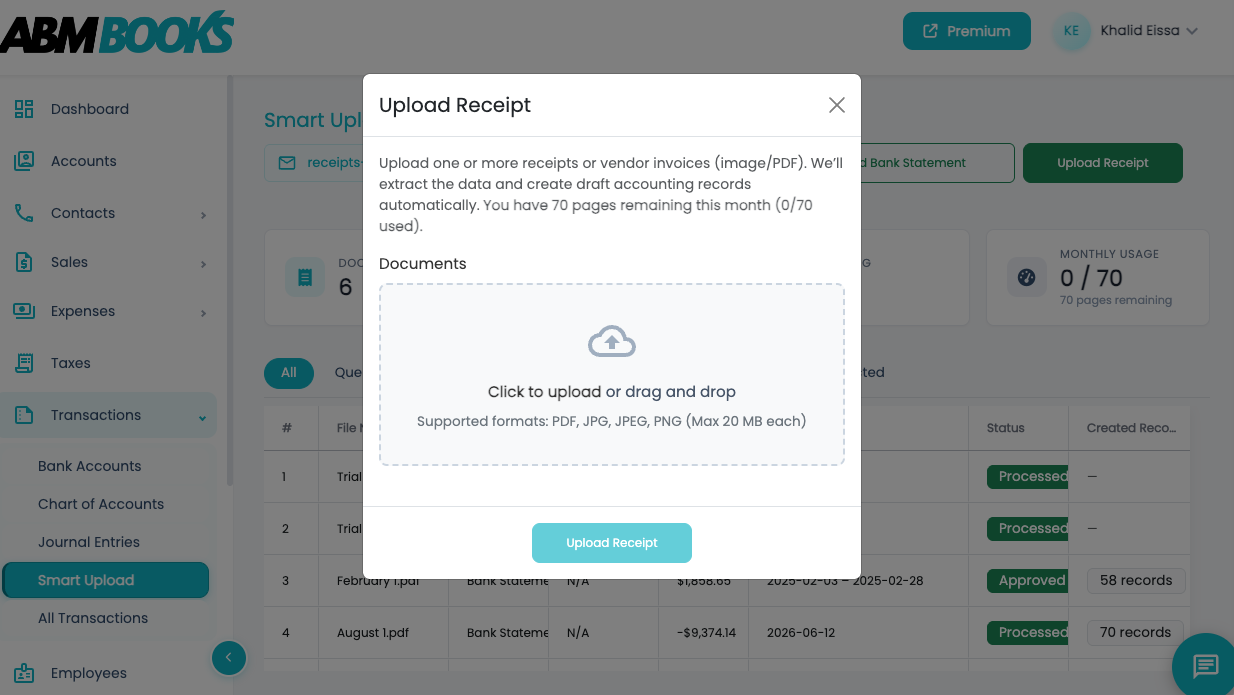
Not a new system. Less system. Dave takes a photo of the receipt with his phone — same phone that was already in his pocket — and ABMBooks reads it: vendor, amount, date, category, done. It’s in the books before he’s back in the truck.
“I used to spend my Sunday nights trying to piece together a month of receipts. Now it’s taken care of on the go.” — Dave
No end-of-month pile. No squinting at a faded slip trying to remember if that was fuel or a parts run. The bookkeeper’s monthly review used to start with a shoebox. Now it starts with a finished set of categorized transactions — she’s checking the work, not doing it from scratch.
Why this isn’t just a plumber problem
Swap “plumber” for electrician, HVAC tech, or any trade that works out of a truck, and the story’s identical. The businesses bleeding the most money aren’t the careless ones — they’re the ones whose actual workday makes “stop and log it” physically impossible. Smart Upload doesn’t ask anyone to be more disciplined. It just closes the two-second gap between “I paid for this” and “it’s in the books.”
Quick answers
Does the CRA accept a photo of a receipt instead of the paper original? Yes. Under Information Circular IC05-1R1, scanned or photographed receipts count as valid records, as long as they’re legible and you can produce them if asked.
How long do you actually need to keep them? Six years from the end of the tax year, per IC78-10R5 — longer if there’s a dispute or you’re carrying forward a loss.
Is bookkeeping for plumbers really that different from bookkeeping for other small businesses? The tax rules are the same. What’s different is the operating reality — field work, multiple job sites a day, and expenses that happen away from a desk — which is exactly what generic bookkeeping advice tends to ignore.
See what’s sitting in your own truck
If any of this sounds familiar — a glovebox full of receipts and a bookkeeper doing detective work every month — it’s worth five minutes to see how bookkeeping for plumbers works differently on your own paperwork.
Book a free ABMBooks demo → https://abmbooks.com/book-a-demo/
Written by Dawit Teferi — CEO of ABMBooks, a Canadian payroll and bookkeeping platform.