Good bookkeeping for contractors isn't about fancier software — it's about having a system you actually follow. Gary, owner of GSP Custom Homes in Winnipeg, learned that the hard way. He didn't start his business to become a bookkeeper. He started it to build homes. But like most contractors and tradespeople, bookkeeping wasn't something anyone …
Good bookkeeping for contractors isn’t about fancier software — it’s about having a system you actually follow. Gary, owner of GSP Custom Homes in Winnipeg, learned that the hard way. He didn’t start his business to become a bookkeeper. He started it to build homes. But like most contractors and tradespeople, bookkeeping wasn’t something anyone taught him — it was something he backed into, one spreadsheet and one shoebox of receipts at a time.
For years, that was fine. Then GSP started running more projects at once, and “fine” turned into Sunday nights hunched over a laptop trying to remember which invoice belonged to which job.
Why Bookkeeping for Contractors Is Different From Other Small Businesses
Contracting isn’t like most small businesses. Every project has its own budget, its own subtrades, its own draw schedule, and its own margin — and that margin needs to be visible while the job is still running, not three months after the final walkthrough.
Running that through spreadsheets meant:
- Job costs weren’t visible until weeks after the fact — by the time Gary saw a project was running hot, the money was already spent
- Reconciling subtrade invoices against draws was eating close to 8 hours a week — nearly a full workday, every week, just matching paper to numbers
- Receipts got held onto and, more than once, lost before they ever made it into the books
- There was no way to see profit per project — only a blurry picture of the business as a whole, months after it mattered
For a contractor whose time is worth more on a job site than behind a laptop, that wasn’t an inconvenience — it was the most expensive part of running the business. It’s also why generic advice rarely works for the trades: CRA’s own record-keeping requirements expect supporting documentation per transaction, which is a lot harder to produce months later than in the moment.
Building a Real System, Not Just Switching Software
That’s what real bookkeeping for contractors actually looks like — not switching software, but building a system. The fix wasn’t a better spreadsheet template. It was a simple, repeatable system Gary could actually follow — daily or weekly — instead of a process that only got attention when the shoebox was overflowing.
With ABMBooks, that looked like:
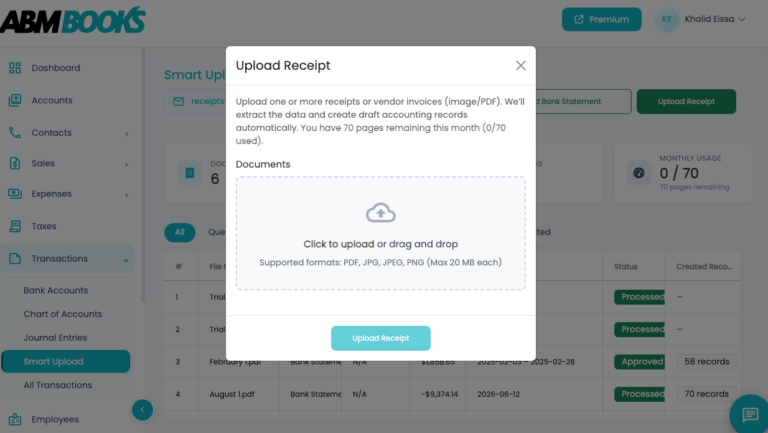
- Photo-capture receipts on site. Snap a photo, upload it, done — no more holding onto paper hoping it survives to bookkeeping day. https://abmbooks.com/bookkeeping-for-plumbers-receipts/
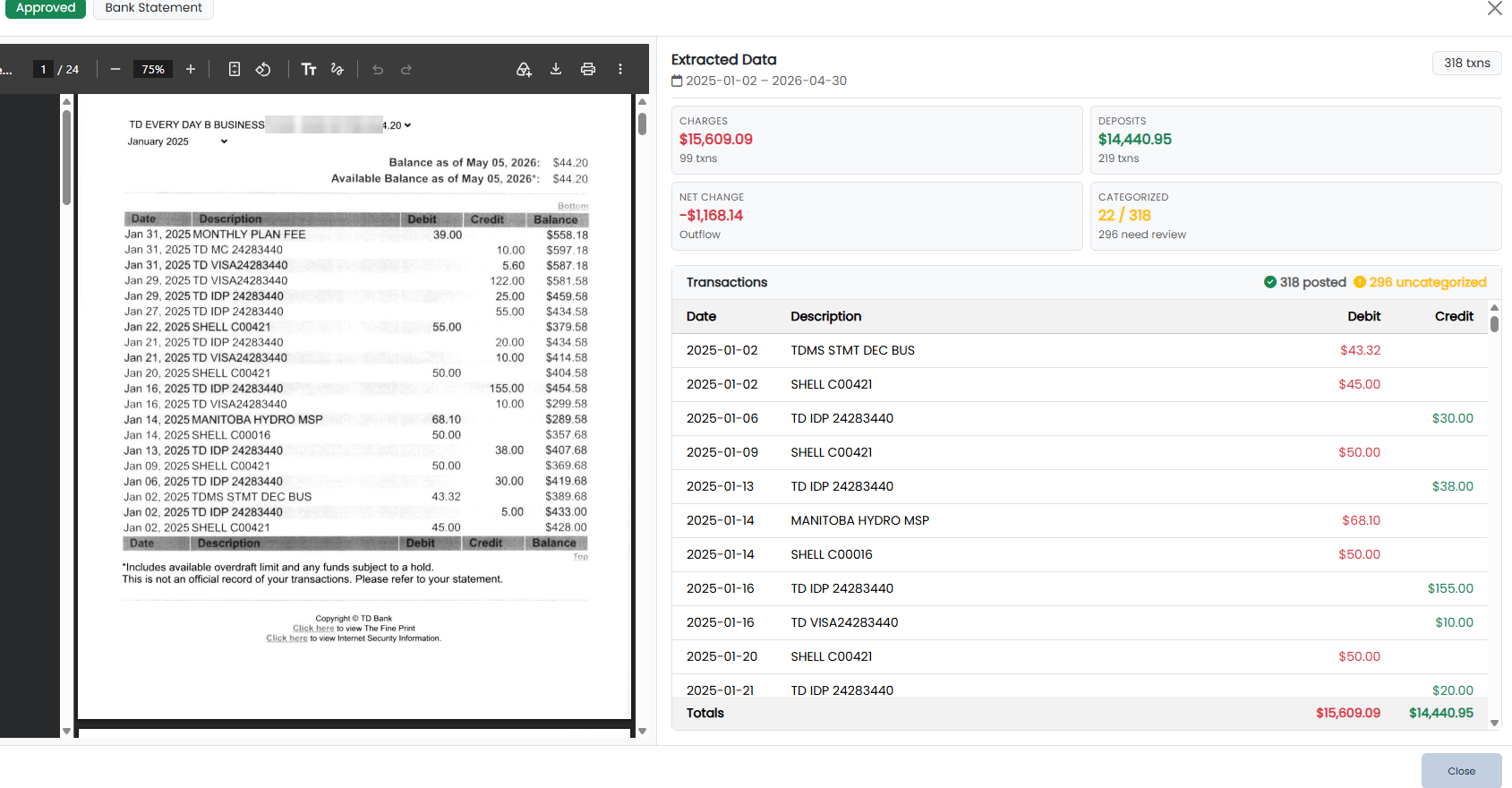
- One monthly reconciliation habit. At the start of each month, Gary uploads the previous month’s bank statement and reconciles everything in one pass.
- One system for invoicing and expense tracking, instead of juggling separate tools for each.
- Job costing by project, so margin is visible while the work is still underway — not after the final invoice clears.
What Changed
Here’s what changed once Gary had real bookkeeping for contractors in place:
- Weekly bookkeeping time: from ~8 hours down to under 30 minutes — about 7.5 hours back every week
- Receipts: from routinely lost or misplaced to captured the moment they’re handed over
- Workflow: from juggling separate systems for invoicing and expenses to one system for everything
In Gary’s Words
In Gary’s own words on what proper bookkeeping for contractors did for his business:
“Before, I was spending close to 8 hours a week just trying to keep the books straight — and when you’re this busy, your time is worth more than money. Now it takes me less than 30 minutes. Instead of holding onto receipts and losing them, I just snap a quick photo and upload it. At the start of the month, I upload the previous month’s bank statement and reconcile everything at once. Having one system for invoicing and expense tracking instead of juggling a bunch of different ones has made everything easier.”
— Gary, Owner, GSP Custom Homes
Real bookkeeping for contractors isn’t complicated — it’s consistent. If yours is still living in a spreadsheet and a folder of receipts, you’re not behind. You just don’t have a system yet. Book a Demo URL